Showing posts with label Bataan Tourism. Show all posts

Monday, October 29, 2018

Experiencing Bataan Hospitality at Sky Hotel in Mariveles


I have mentioned on my previous post about how Mariveles has its own unique charm. If in case you have not yet read about it CLICK HERE. The town has many tourist destinations to offer and a day tour will not be enough to stroll the beautiful town of Mariveles. Take it from my experience, a supposedly just a day-tour in Mariveles ended up for a 2D1N weekend adventure. 


Foods will always make every travel more interesting. After experiencing the lutong-bahay menu at Elong's Hapag Kainan, we tried Chicken Deli for dinner. It must be noted that the restaurant is a Bacolod Original. We ordered their best-selling chicken-inasal and halo-halo for our dessert. 

Chicken-inasal of Chicken Deli

Special Halo-halo of Chicken Deli
The like the interior of the restaurant. I felt like I was in Bacolod attending a MassKara Festival. The area is colorful and well-maintained. The place is also spacious, neat and clean. The crews are very accommodating too!


During my trip, we stayed at Sky Hotel. Sky Hotel is managed by Watchlife Workers MPC and is located at 179 Lakandula St., Poblacion, Mariveles, Bataan. The hotel caters tourists and travelers. Also, they allow transients and office rentals.


The hotel offers various room selections: single bed, standard room, family room and view deck. Price ranges from Php 1,000.00 to Php 2,500.00 for overnight stay. They also provide extra bed with additional charge. Breakfast is available upon request with a minimum of 5pax with unli-coffee and unli-rice. Rooms are well-ventilated, clean and fresh. 


Indeed, staying at Sky Hotel was a great choice for my Mariveles adventure. So if you are heading to Mariveles for a weekend adventure, visit Sky Hotel to experience Bataan hospitality. 

The Unique Charm of Mariveles, Bataan


Bataan is a historical province and also known for its Mt. Samat National Shrine as a major tourist destination in the province. Playa la Caleta, Las Casas Filipinas de Acuzar and Camaya Coast were the three beautiful destinations in Bataan that I have proudly visited. There are a lot of beautiful places to visit in this province and Mariveles is one of them. Mariveles is a first class municipality and is located at the southern tip of the Bataan Peninsula. 

Mariveles Municipal Hall

I have no idea how uniquely charming this town is until I met Rustan on social media. Rustan is a travel blogger. I have noticed his regular posts about his hometown so I got curious and wanted to visit the places he posted on his social media account. Luckily, he invited me to join a tree-planting activity initiated by the local government unit of Bataan but I decline because the call time of the event is too early. I wast not able to attend the event but I promised him to visit Mariveles on the same date.

Baywalk.

As promised, I visited Mariveles. I took Genesis Bus in Pasay City and arrived in town after a 4-hour ride. While waiting for my friend, I strolled the beautiful town. I visited their municipal hall, bay walk and their parish church, St. Nicholas Tolentino Parish Church. The 1729 parish church belongs to the Roman Catholic Diocese of Balanga. Apo Kulas, the Patron Saint of Mariveles, arrived in the town through the Orders of Augustinian Recoletos Missionaries. 

St. Nicholas Tolentino Parish Church


I was very glad to meet Rustan. We had a great conversation and we were able to share our travel experiences to each other. I was honored to know that he is the person behind Bataan Weather Page. According to him, the page is already making waves in Bataan. I was able to validate the news when I searched the page on FB. Indeed, it is an active FB Page with a thousand of followers. 

Elong's Hapag Kainan

Bulalo for Breakfast!

We woke up early morning to visit other places in Mariveles. I feel grateful that I was able to gain friend who is also into traveling. I requested him for a lutong-bahay restaurant for breakfast and without hesitation he took me to Elong's Hapag Kainan. The restaurant offers varieties of Filipino foods from appetizers, main dish and desserts. The food is great and worth the price. I also love their interiors.

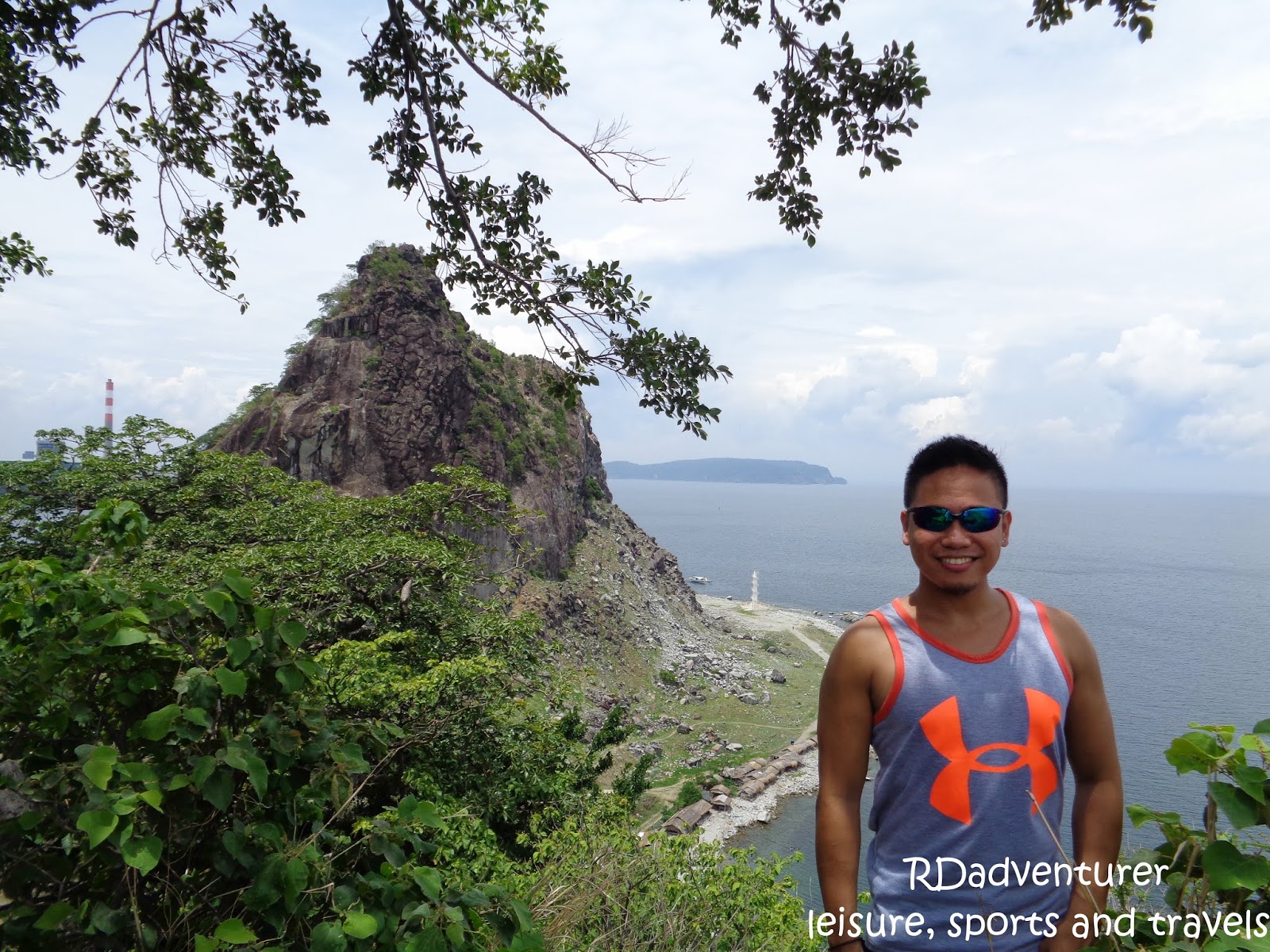
San Miguel Peak on the background.
After our breakfast, we took a tricycle ride to Brgy. Sisiman. Sisiman Bay is well known for local tourists. It is a public beach where bamboo cottages can be rented by picnic goers. 


San Miguel Peak is a landmark in Sisiman Bay. It is an ultimate rock mountain that stands 700+ feet high and can be reached thru trekking for about 30 minutes. The panoramic view of the entire Sisiman Bay can be greatly seen at the summit. For those people who are looking for adrenaline-rush adventure, San Miguel Peak can be a great playground for rock climbing and rappelling.   


Adjacent to the peak is a small hill which offers a greater view of the San Miguel Peak. The hill can be trek for about 20 minutes. On the way up, there is a grotto built on the hill and a steel cross on the hilltop. This hill might be well-visited by pilgrims during holy week season. We took time to rest on top of the hill while enjoying the view and the cool fresh air. 


I must say that my visit in Mariveles even just for a weekend is very memorable. You may want to consider visiting this town for an adventure you will remember. Mariveles has its own unique charm to capture everyone's heart. I will definitely visit this place once in a while. 

Tuesday, August 26, 2014

Las Casas Filipinas de Acuzar: Bagac, Bataan


I have been reading blogs about this place in Bataan and got me wanting to visit the place. I included this on my itinerary so I can finally visit the old houses built near the metro. Got the day tour so I can also visit some other places in Bataan. Day tour was worth it. Come join me as I explore the area. 


CASA CAGAYAN

There presently stands four (4) houses along the shoreline of the property, which where originally from Cagayan province. During the early 1900's, these houses were referred to as the Poor Man's Houses.

The typical house was built on stilts with the tree trunks in its natural shape used as posts in order to give its residents extra space for relaxation, storage and livelihood activities. 


CASA LUNA

The Mansion was originally owned by  a prominent Novicio Family of Namacpacan, La Union and it was built in circa 1850. Namacpacan, now called Luna, was named in honor of the famous Luna Brothers. Antonio Luna, the general and Juan Luna, the painter. 

The immense symmetrical house was constructed on a square plan typical of the Ilocano Bahay na Bato. The ground floor was used as a chochera for the carriages and bodega of garlic, onions and tobacco that were harvested at different times of the year. 


The second floor, where the bedrooms are distributed around the grand living room, is shielded by the volada on the entire length of the facade. On the rear portion of the second floor is a grand dining room serviced by an equally large kitchen area with an azotea. Toilet and bathroom are located adjacent to the azotea. The well that supplies the house with water is below azotea, in the rear yard. 

The Novicio house became a rendezvous of important gathering and meeting during the liberation period on the latter part of the Japanese occupation in 1942. It also became a headquarter of the United States Armed Forces in the Philippines, Northern Luzon (USAFIL-NL), where they planned the operation for the capture of General Yamashita.   


CASA LUBAO

The Lubao House is a family's ancestral home. Valentin Arrastia and Francisca Salgado, buit the plantation house in Lubao, Pampanga in the early 1900s. It sat directly in front of the Lubao Municipal Hall. During the WWII, the Japanese took possession of the house and used it as a garrison. 


The original structure of the house had a wooden upper floor and concrete ground floor, a variation of the "bahay na bato" style of architecture - combining Filipino, Spanish and American design elements. It had large room and high ceilings. And in typical colonial design, it had straight, grand staircase that led directly up to the front door. 


I was really amazed on the history of every house built on the place. As we went to the next house, I took time to capture other places within the vicinity. Weather was looking great for taking photographs. 


bridge connecting to Hotel de Oriente 


Hotel de Oriente on process...

The Pool 


CASA BINAN (Alberto House)

This two story house reputed to have been originally built by Gregorio Alonzo in the 16th Century, is located in front of Binan Plaza, Laguna. The ownership passed to one of his sons, (Cipriano representative of the Spanish Cortez and also Jose Rizal's maternal grandfather). Lorenzo Alberto Alonzo's daughter was Teodora Alonzo later known as Teodora Morales Alonzo Realonda y Quintos (Mother of Rizal), who eventually inherited the house and expanded it in the 18th centuy.   


CASA HIDALGO

Built in 1867, the mansion, filled with ionic capitals from the colonnaded sidewalk, to the columns found in the balcony front, was designed by the first Filipino to practice architecture in the Philippines during the Spanish era, Felix Roxas y Arroyo, for the family of Rafael Enriquez. Originally located at the corner of Calle San Sebastian (now R. Hidalgo St.) and Callejon de Carcer in Quiapo District, Manila. The house was considered the most elegant in the entire country during the Spanish regime, as narrated and decribed by American historian A.M. Norton sometime 1908 and 1909. 


The mansion was the used as the first campus of the University of the Philippines School of Fine Arts with Enriquez as its first director from 1909 to 1926, before his death in 1927. It was also the first school of Architecture in the Philippines. 


CASA BALIUAG 1


CASA TONDO


PASEO DE ESCOLTA

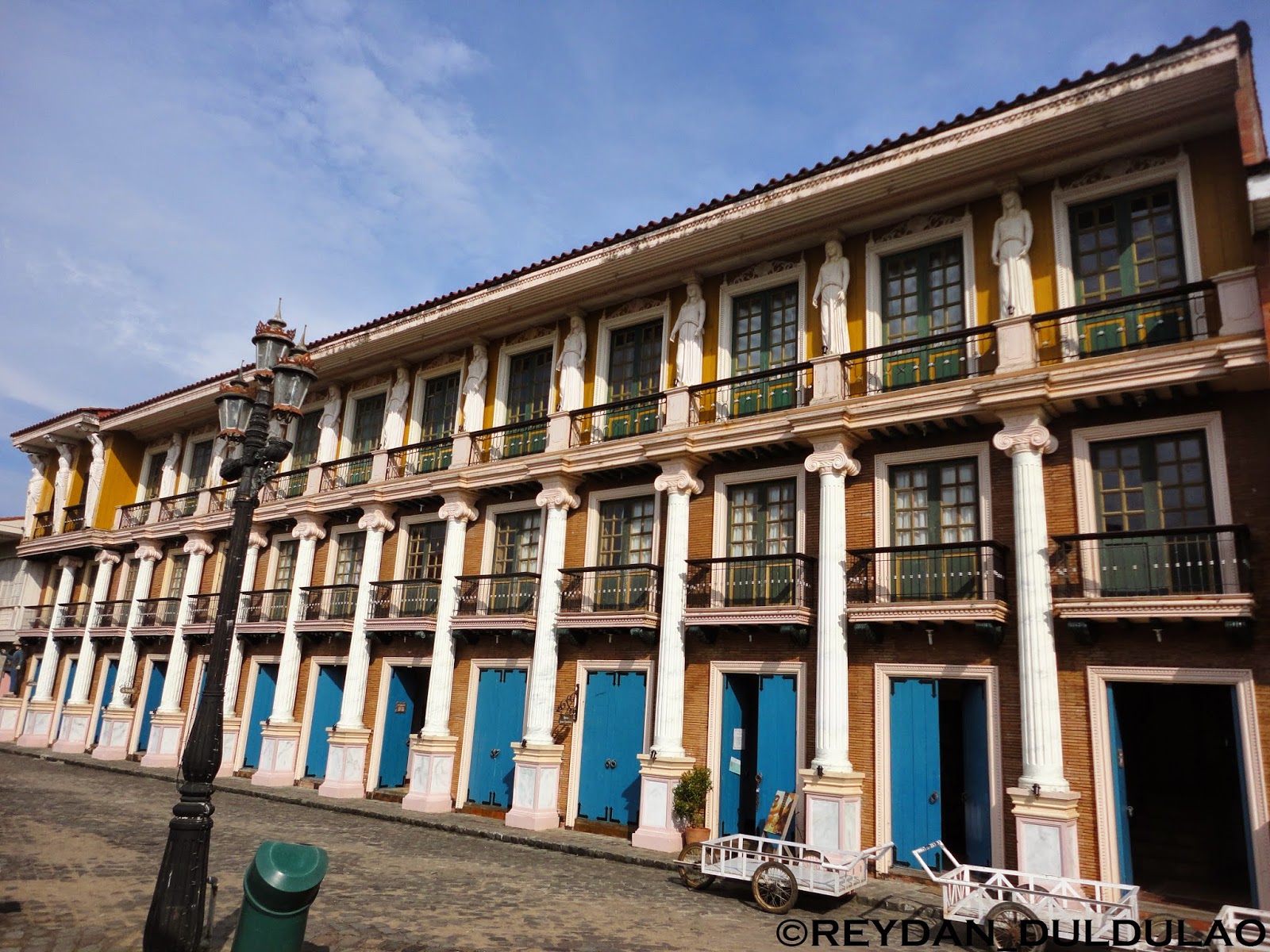
The strip of supposedly commercial structures are replicas of the typical Escolta Buildings  in Manila during the early 1900s. Buildings during the said era had stores and shops on the ground floor and hotels on the 2nd and 3rd floors which then catered to transients and tourists. 


CASA BIZANTINA

The Casa Bizantina house is a bahay na bato at the corner of  Madrid and Penarubia Streets in San Nicolas, Binondo. The ground storey is built of stone and bricks while the upper storeys were made of various Philippine hardwood. The structure was typical of the bahay na bato in order to protect the inhabitants from earthquakes. Galvanized iron sheets are used for the roofing. 


Door Entrance

Living Room


One of the rooms of Casa Bizantina

Hermes Toiletries

After an hour tour, I also took time to visit the places where we were not able to visit. It was great to see a grotto within the premises.

The day tour to Las Casas Filipinas de Acuzar was great. Feels like I have lived in the past for an hour of my life. So amazed on the old architectures. So much joy to see these old houses in just one place. 


Exit Wall